A bride does not just wear a gown on her big day. She steps into a memory and how she will be remembered long before the day has even finished. Like a queen in a painted portrait or a bride caught mid-step in an aisle photo, the outline of the gown tells everyone where to look, and exclusive wedding dress collections at MISSIA help shape that first impression into something lasting. The emotion of bridal fashion comes from this simple truth: the dress does not only cover the body. It creates the picture.
Royal portraits make that lesson easy to understand. The viewer may look at the face first, but the gown controls the mood around it. A tall collar can feel formal and composed. A gentle neckline can soften the whole image. A wide skirt can make the bride look almost like part of the room’s architecture. In that way, the silhouette becomes the wedding’s first visual sentence.
The Bride as a Formal Portrait
Royal portraiture has always treated clothing as a tool of attention. All elements, to the smallest detail, such as a crown, collar, sleeve, train, or veil, are not random decoration. It points the viewer toward mood, dignity, softness, or power. A modern wedding photo works in a similar way, with the bride at the centre of a living composition.
This does not mean a bride needs to look like royalty. It means the same visual rules still work. In a royal wedding image, people remember the broad impression before they remember the detail: the line of the shoulders, the sweep of the veil, and the balance of the bodice and skirt.
Thus, the best bridal shape is not simply “flattering.” That word is too small. A gown can frame a face, lengthen a walk, soften a pose, or add drama to a room. Designs of professional bridal boutiques, such as MISSIA, follow this visual tradition, where the dress is not a costume but the main shape in a personal portrait.
Necklines and Sleeves as the Frame Around the Face
Since the neckline sits right beside the face, it has a way of setting the whole mood before anyone studies the rest of the dress. A straight neckline brings a clean, composed feel. A sweetheart shape feels softer, almost warmer. Bateau necklines have a neat elegance because they draw a smooth line across the collarbones, while a plunging cut creates more movement through the body. A high neck works differently again, pulling the eye back up and giving the face more presence.
Sleeves add their own kind of character. Long fitted sleeves look graceful around a bouquet. Puff sleeves bring lift, charm, and a bit of drama. Sheer sleeves soften the edges because lace, skin, and light all meet in a gentle way. However, sleeves and necklines need to get along. When both try to steal the show, the look can feel too busy.
That is where exclusive wedding dress collections become useful. They let a bride see the small but powerful difference between a square neckline, an off-shoulder sleeve, or a lace cuff without having to imagine it from scratch.
Volume: How Space Becomes Emotion
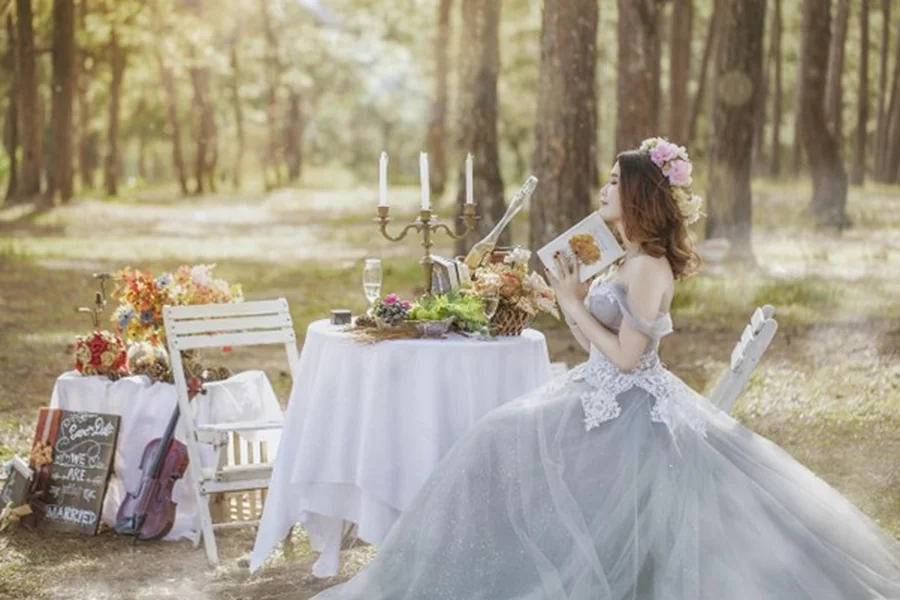
Volume is where a wedding dress stops being only clothing and starts shaping the room. A large skirt can fill a staircase, command a church aisle, or create a grand circle on a dance floor. A slim gown, by contrast, can make the bride look sharp, close, and easy to approach. Each one writes a different visual story.
Think of volume as the amount of space the portrait asks for. A ball gown asks for distance. A mermaid dress asks for movement because its power appears when the bride turns. An A-line gown gives balance across many venues. A sheath dress brings the viewer closer, so fabric quality, posture, and small details matter even more.
For brides drawn to exclusive wedding dresses, volume can be the detail that makes a gown feel rare. It may come from layers of tulle, a sculpted overskirt, crisp satin, or a train that opens behind the body like a fan. However, volume should match the setting. A dress that looks majestic in a ballroom may feel crowded in a tiny garden.
A Small Composition Guide for Bridal Shape
These choices become easier when they are seen as parts of one picture, not separate shopping features. Like a formal portrait, a bridal look needs balance between face, body, fabric, and space.
- Start with the face. Choose a neckline that makes the expression feel natural.
- Let sleeves set the mood. Bare arms, lace sleeves, fitted satin, and soft volume each change the tone.
- Use the waistline as the centre line. It decides whether the dress feels classic, elongated, lifted, or sculpted.
- Treat the veil as light. Its length and texture can soften the image or add ceremony.
- Match volume to the room. A gown needs presence without fighting the space.
And yes, small details, like beading, lace, buttons, and embroidery, still matter and can make the dress uniquely yours. Yet years later, many people mostly remember the shape, collar, sleeves, waist, veil, or skirt. For that reason, exclusive bridal dresses stand out when their outline feels clear before the decoration is even noticed.
Current bridal trends may change from season to season, but the core questions stay steady. Where does the eye go first? What does the outline say? How does the dress move through space? A strong bridal look answers those questions without relying only on sparkle or novelty.
The Lasting Shape of the Memory
A wedding dress becomes part of family history because it gives love a visible form. Necklines frame the face, sleeves set mood, waistlines shape posture, veils add atmosphere, and volume decides how much space the bride’s image claims. Therefore, the most memorable gown is not only beautiful up close. It also works from across the aisle, in a formal portrait, and years later in a photo held by someone who still remembers the room.